Showing posts with label babies. Show all posts

Saturday, January 9, 2016

Making a Decision: Who is Teaching My Child? A Five Part Series on Choosing a Preschool

Research indicates preschool education has many benefits for children.  In addition to exposure to curriculum including literacy experiences, mathematical concepts, and science activities, a high quality preschool gives children the opportunity to learn how to socialize, to share and to contribute to society.  Making a sound decision about early childhood education is a crucial for a successful start on your child’s lifelong educational journey and there are many aspects to evaluate:  teachers, curriculum, philosophies, safety, family partnerships, and environment.  So, how do you make the right choice?
In this part we will discuss what should be the deciding factor:  Teachers!  The adults who interact with your child on a daily basis are key to a positive experience for your child!  A warm hug to ease separation anxiety or, conversely, a stern raised eyebrow inappropriately can affect how children perceive themselves and also affect their trust in others.   Whether you are considering family care, a nanny, or a center-based program, the people who care for and educate your child are of the utmost importance.  Visit the prospective school and observe the teachers’ interactions with children.   You should see:

q  Teachers in engaged two-way conversations with children

q  Teachers interacting at the children’s eye level

q  Teachers who are warm, patient and friendly

q  Teachers using gentle voices and an encouraging manner

q  Teachers and children with lots of smiles and happy faces

q  A classroom filled with happy sounds

q  Teachers who are organized and prepared

q  Teachers giving children the opportunity to choose activities.

q  Low Turnover

Watch to see if the teacher is actively listening, rather than pre-occupied or distracted with other events in the room, or being dismissive to a child.  During active listening you should see the teacher smile, nod, or acknowledge with her body posture she is interested in what the child has to say.  Active listening builds a child’s confidence and self worth.  Compare the spoken and unspoken interactions you see to those you would see in conversation between two adults who respect each other, and you should see similarities in body language, interest and intensity. 

Did you know the national average of turnover in child care staff is 30%!!!  At Kangaroo Kids we are so fortunate to have an outstanding staff who year after year have demonstrated their commitment to children and families!  We proudly boast that every lead teacher has been with Kangaroo Kids 7 or more years!  Therefore our turnover rate among our lead teachers is Zero.
According to Child Research.net a key to providing quality programs is retention of child care staff, the average annual turnover rate for child care is 30% in the United States.  Consequently, there have been a large number of studies conducted to wrestle with the issues of turnover. 
“Among the research examining the quality of early childhood programs, rate of job turnover for child care staff seems to be a strong indicator of program quality (Cassidy, Lower, Kintner-Duffy, Hegde, & Shim, 2011; Mims, Scott-little, Lower, Cassidy, & Hestenes, 2008). Raikes (1993), for example, explained that frequent turnover among early childhood teachers prevented children from developing a secure attachment with teachers. In addition, teachers' high turnover negatively affected children's social, emotional, and language development (Korjenevitch & Dunifon, 2010). Not only the relationship between teachers and children, but the relationship between teachers and parents also suffered from high turnover (Cassidy et al., 2011).
  
Teachers should be organized and well prepared.  Children should have an opportunity to choose activities.  A well-prepared and organized teacher provides a role model of organizational skills for children.  Choosing their own activities enhances children’s decision-making skills and sends the message that they and their choices are worthy!  Making good decisions is a lifelong skill you want children to develop as early as possible so it carries them through their teenage years where their decision-making skills will constantly be tested.  

Good teachers are energetic.  They enjoy the process of teaching and engaging with children.   They look for teachable moments, whether it is a butterfly going by, a leaf falling, or a chance to teach positive social interactions. 


Watch for upcoming articles on safety, environment, curriculum, and parent involvement.

Wednesday, July 22, 2015

Summer Sensory Play


 If your child comes home  from preschool looking picture perfect everyday, it is time to delve into the kinds of activities the class is doing during the day!  Young children learn with all their senses and should have a variety of opportunities for exploration.  There will be times when children may get a little paint on their clothes or play dough under their fingernails, but in the process they are increasing their knowledge as well as developing their sense of creativity.  Children learn by mixing paints to create their individual artistic treasures, by splashing and playing in water to discover which objects sink or float, and by mixing the ingredients of their own special play dough to see how various substances integrate and how the combination changes the properties of the ingredients.   Kangaroo Kids Summer Camp does many  “Messy But Meaningful,”  projects.  

Remember “Silly Putty” and “Slime?”  If you enjoyed playing with either of these as a child here is a homemade version you can make with your child called “Goop” You may encouraging a future scientist!

Goop
  1. Two cups glue
  2. One cup liquid starch
  3. Mix together
  4. Store in refrigerator

Too busy for sensory play at home?  Here is one that will give you a sense of accomplishment while your child is having a sensory experience.  Get a big bucket and lots of soap and wash the dog together!  You can teach your child about the fascinating chemistry of how the bubbles form (if you need a little help visit http://chemistry.about.com/od/bubbles/a/bubblescience.htm ), or give your child a lesson in kindness to people and pets to reinforce social skills during the bathing! 

Play dough is a good old standby, even for the toddlers!  Mix the ingredients below and get out the cookie cutters and a rolling pin and let your child explore.   Make a pretend birthday cake or form shapes and letters with the dough! 
Play dough
  1. 3 cups flour
  2. 1 cup salt
  3. 3 Tablespoons oil
  4. 1 cup of water
Painting – Be creative instead of just using a paint brush let your child paint with different instruments such as rollers, matchbox cars, or q-tips!  You can even use those old apples to do stamp painting by cutting the apples in half and dipping them in paint.  You never know you might be encouraging the next Picasso! 

Shaving Cream Fun- Here is a fun summer way to work on literacy skills and shape recognition while you are enhancing creativity.  Just put a big squirt of shaving cream on that outside picnic table and let your young artist explore.  You can add to the fun by making the shapes or the letters of their name for them in the shaving cream. 

Give foot print painting a try, but this one is best to do outside! 

Tuesday, December 2, 2014

Winter Wonderland at Kangaroo Kids

Celebrate the season with Kangaroo Kids!  Get in the holiday spirit! Bring the family to Kangaroo Kids Child Care and Learning Center’s Winter Wonderland on Friday December 12th from 6:30-8 at 1047 Route 28 in Branchburg.

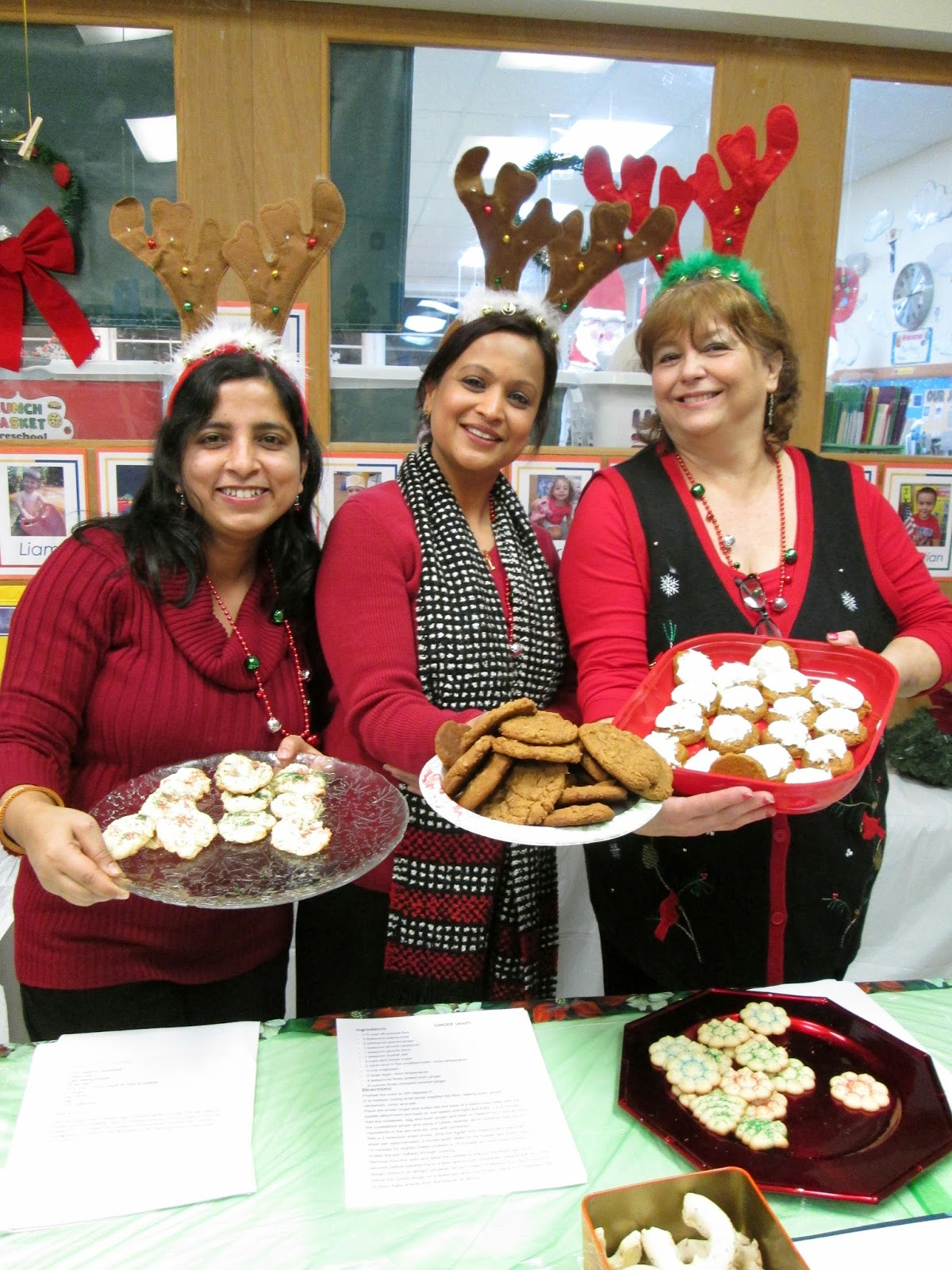
Come hear a professional singer, Mr. Ray  perform songs from the season, make some holiday crafts,  take your photo with Santa, and join in on our sing-a-long!  There will also be a cookie exchange so bring a plate of your favorite cookies with copies of the recipe.  There will also be a photographer available for professional family photos.  All new this year will be a Gingerbread house display.  If you would like to participate in the Gingerbread Display call or email the school for details and deadlines. 

The event is Free to the public and is appropriate for children under 10 years of age.  Call 908-231-7800, email staff@kangarookidschildcare.com or like Kangaroo Kids Child Care facebook page for the latest details on the event or for further information. 


Tuesday, November 18, 2014

Encouraging Creativity

Why is getting messy and creating those lovely works of art that you can't quite give a name to important?  One of the strengths of our country has always been being creative and resourceful.  As we move more and more towards testing and product based projects and worksheet education in young children's programs we are creating rote learners instead of creative thinkers.  If you doubted the value of process based hands on learning and the value of getting messy read this post.  It is a great article by Cindy Rzasa Bess, Ph.D. a Professional Speaker/Trainer, Developmental Psychologist, Education Consultant in her November Newsletter 


Art Smart from the Start
Back when I was a little girl, I always believed that giving my parents a hand made gift was the ultimate expression of love.  I made kiddie-loomed pot holders and clay animals; original paintings worthy of a popsicle stick frame; and, even the ever popular orange juice can converted into a pencil holder.  When we were going through my dad’s things after his passing I was stunned to find a drawer containing fifteen OJ can pencil holders!  He kept everyone!  Apparently my belief about the ultimate expression of love went both ways!  It was a very touching moment for me, to say the least!

Encouraging and supporting the flow of personal creative self-expression in a young child is one of the greatest gifts an adult can give him or her. Providing the chance for a preschooler to dabble in the arts and try new experiences is priceless and precious.  Unleashing his or her inner creativity, which ultimately follows its own path to self-expression, is a precious present.  Acknowledging that he or she is a wonderful and creative individual, capable of making great things that beautify the world is a meaningful message.

Hands-on learning through individual creativity should be highly prized in the education process.  Refraining from demanding conformity from these young hearts and minds is only fair at this tender age.  Imagination should be given a chance to grow, blossom, and flourish before the shackles of compliance are clapped shut.  It is okay for bears to be pink or green; and its fine for bunnies to have five ears.  It is alright for the wheels on the bus to be square; it makes for an interesting ride. Children have a whole lifetime to conform to societal expectations and to eventually admit that bears are black, brown and white.  Why force them to give up their innocent, inventive, and innovative perspective in favor of the old boring one adults share?  Teachers who are in touch with their own inner child know this truth, and do not squelch individual creative self-expression, but instead honor it and give it space to thrive.

Children learn best through doing.  They are by nature curious little beings.  They love to try new things and explore and experience the world, and their place in it. Jean Piaget said that young children construct their own knowledge by interacting with their environment.  They learn by doing solving problems and experiencing their options.  There are so many places in the Early Childhood Classroom where they can explore and experience their creative and inventive self:  The music center, the dramatic play area, the science center and the art center.  Even the block area and the fine motor small building toys allow for the child to create new structures and discover their ability to change the world through their action.  There is nothing greater than seeing the smile of accomplishment as it crosses a child’s face.  They know they have done something valuable and often show you their work with pride, with the accompanying announcement of “I did it!”

How can Artistic Self-expression be included in the ECE classroom?
· Incorporate Visual arts - drawing, painting, sculpting (play dough), making textiles (weaving), creating collages
· Encourage Language Arts - Discuss rhyming and create a group poem, write stories as a class, write a book of tales as a group and add it to the book nook
· Enjoy Performing Arts – Theater (putting on a puppet show, re-enacting a fairy tale);
       Singing (to the group or leading the group in song);
       Dance (music and movement)
Why offer Art?
Creative Art enables:  Self-expression
                                                   Communication of ideas -- without words
                                                   The discovery of one’s self
                                                   Exploration of the physical world and its properties
                                                   Learning to follow directions
                                                   Acquiring new skills, mastering and redefining them
                                                   Thinking “Out of the Box”
                                                   Cooperation and collaboration
                                                   Demonstration of persistence and tenacity
   Expansion of vocabulary
   Extension of experience

But most important of all it says to a child, you do not need someone else to provide toys and produce special things for you, for you are capable of making them yourself to use, play with and enjoy!

Process versus Product Art
Believe it or not there is a place for both in the early childhood classroom.   However the rule of thumb should be Process Art always available, Product Art occasionally incorporated.  Children can benefit from having an activity that requires active listening and following directions.  Examples can be replicated every one in a long while. But, these projects should be done rarely and be used as a means for assessment. Although parents like to see the standard choo-choo train made from colorful pre-cut paper shapes, or the duck made of glued yellow feathers come home, it is not the best way to teach a child about art and the true creative experience.  Real art comes from within.  Children should be encouraged to be the artists that they are within their own being.  Art should not be a method for assessment. Refrain from doing “product art” too often, after all they have a whole life time to bend to society’s will.  This is the time for active, unencumbered fun, and self-expression.

Whenever you work with a child, encourage imagination and creativity wherever you can. Refrain from asking young children to conform to a preconceived idea of who they should be, what they should be doing and encourage freedom of expression in language, in art and in play (Of course, within limits.)  When a child is allowed to produce original work there is a greater process going on.  They are able to define their own area of interest and way of interacting with the materials.  They are able to define and develop their own plan of action and are able to solve problems in unique ways as they happen.

When children are encouraged to be creative in their pursuits they:
· Learn to work through events                     
· Recreate things they know or situations they have encountered
· Make sense of the bigger world                 
· Grasp the importance and value of symbols through representation
· Enhance their self-esteem                           
· Increase motor skill development and refinement
· Become more independent                         
· Develop new cognitive skills and learn new concepts
· Feel more competent                                   
· Develop stronger social skills
· Understand qualities or properties of materials (sticky glue, runny paint, etc.)

Also, when they are encouraged to try new things and create something that comes from their own brain, we are encouraging innovation and invention in later development.  When they are forced to conform to predetermined and preconceived patterns, their own creativity is squelched.

However, children can make their own space ships and cars from simple classroom materials, and these can be constant reminders that they can make significant contributions to their own world.  By making children aware of their potential as creators and producers, we empower them to break free of the consumer role that the business community would gladly have them fill.

Please be respectful of a child’s art work and realize the value it holds for him or her.  There is nothing sadder than to see a child deflate as a teacher writes directly on his or her picture.  If you as an adult really NEED to note it is a picture of a house and of Mommy, do so on a post it note that can be peeled off, rather than on the child’s actual art work.  Just because you are bigger than him or her, doesn’t mean you don’t have the right to “graffiti” his or her work.  Showing respect for a child’s efforts is vital and also considerate. Encourage, acknowledge, and offer the chance to be creative, constructive and productive.

Please also realize that there are many children who are dissuaded from painting and using messy materials in the home.  If they don’t have time in the early childhood setting to discover the different textures and tactile experiences that come with messy art, a whole part of the self-to-be might never come to fruition.  Doing is the key to learning.  Being with the materials is the key to understanding them in relation to the self.

Hopefully when the beautiful masterpieces come home, they are given a prized place for display and are not relegated to the 3” deep with artwork refrigerator museum.   Nothing sends a stronger message to a young child than to see his or her parents frame a piece of artwork and display it prominently in the home.

Monday, September 15, 2014

Staff is Key In A High Quality Child Care Program

Making a decision about which child care or preschool program is best for your child is a crucial decision in your child’s first step in the life long learning process.
 

Staff is Key! Visit the prospective school and Observe the teachers interactions with children.  How are teachers interacting with children? You should see teachers in engaged conversations with children at their eye level, either sitting on the floor or with them in low child size chairs. 


            You should see a lot of eye contact, just as you would in a meaningful interaction between adults.  Another important aspect to observe is if there is active listening and two way conversations occurring on the part of the teacher and child, as opposed to the teacher being pre-occupied or distracted with other events in the room.  Active listening shows an interest in the child and places a value on what the child is saying. 

            Interactions should be warm and friendly, with gently encouraging tone of voice. 
Good teachers are energetic, patient, and enthusiastic about the children, the activity and the environment.  They look for teachable moments, whether it is a butterfly going by or a leave falling or a chance to teach positive social interaction. 

            Ask about the longevity of teachers in the program.  Happy teachers not only provide stability for children but in most cases mean they like their job! Teacher’s should be organized and prepared and give children an opportunity throughout the day to choose activities. 

            Finally you should see happy faces and lots of smiles on the part of the teacher and the child, an enjoyment of life and the experiences they encounter together.  Listen for “Happy” sounds coming from all the classrooms. 


            For more information on this topic or to obtain a copy of a free check list you can use as you visit child care centers, call or visit Kathy Feigley at Kangaroo Kids Child Care and Learning Center, 1047 Route 28 Branchburg, 908-231-7800 or email staff@kangarookidschildcare.com or connect with Kathy on Kangaroo Kids LinkedIn Page or Like Kangaroo Kids Child Care Facebook page.  Watch for more things to look for in quality programs for young children in future posts.  

Wednesday, November 14, 2012

Minimizing Holiday Stress!


Dos and Don’ts of Minimizing Children’s Holiday Stress
By Barbara Thornton

During this holiday period, there are lots of fun activities and events going on both at home and at school, and while this is a good thing, holiday stress does cause varying degrees of anxiety in children.

Routines are important! Loss of sleep, change in diet and over stimulation can result in unhappiness for everyone, but these effects are often greater for children.  So DO keep your child’s eating, sleeping and activity schedule as close to regular as possible. And when a change in routine is inevitable, try to get back on track as soon as you can.  And DON’T let your child overdo on sweets.

DON’T over schedule your child.  Don’t say yes to every invitation or request, or you will end up with more activities than your family can happily handle.  DON’T forget – less is more.

If you are the type who must plan, then -
DO plan quiet time:
Reading stories
Hot cocoa and popcorn
Movie night at the house
Writing Holiday cards with a grandparent
DO plan activities to keep your child moving:
            Going skating
Swimming at the YMCA
Outside play dates
            Nature walks

DO watch your child’s cues. If you see your child starting to get tired or acting cranky, changing your plans may save you lots of grief in the long run.  You may need to take a snack break, or add a nap on a day you didn’t expect it would be needed.

DO remember that you are the most important role model for your child.
Set a calm example. Keep things in perspective. Don’t set unrealistic expectation for yourself or your family members.  Don’t compare the present with romanticized memories of holidays past.

DON’T blow things out of proportion.  Even when things don’t go the way you had hoped, remember that a disaster now results in a funny story later.

DO take care of yourself.  This may seem counter-intuitive with the holiday season messages, but being at your best is the most important gift you can give your family. Pay attention to your own needs and feelings during the holiday.  One way to help alleviate your own stress is to take advantage of Parent’s Night Out at Kangaroo Kids.

DO accept that there will be stress. But DO live in the moment, DO appreciate every moment you share with your child, and DO be thankful for all you have.

Happy Holidays!

Wednesday, October 10, 2012

5 Things to Look for When Choosing a School for your Child

  1. Staff is key!  Look for attentive and caring teachers.  You should see lots of smiles and warm, patient interactions.  Ask about the longevity of teachers as consistency provides a secure base for children.

  1. Is the facility safe?   Are outlets appropriately covered, is there a procedure for security at drop off and pick up times, is the playground fenced, are the teachers backgrounds checked, and are teacher’s first aid and CPR certified?

  1. Is the school clean?  You may see toys around the room and that is a good sign that children have many opportunities for learning in different environments and with different materials.  What you want to look for: are the floors clean, is there a system in place for toys that have been in children’s mouths, is the facility cleaned on a regular basis?

  1. Ask about the curriculum.  Are lesson plans posted, do teachers assess children, are there a good supply of materials available to children?

  1. Trust your instinct!  You should hear happy sounds, respectful communications, and warm interactions regardless of the room you visit! 

You can email staff@kangarookidschildcare.com for a complete checklist of what to look for when visiting a school.  

Wednesday, March 21, 2012

Most Popular Baby Names

According to the Social Security Administration, Jacob is the most popular boy’s name of the 21st century (so far), followed by:
• Michael
• Joshua
• Matthew
• Daniel
• Christopher
• Andrew
• Ethan
• Joseph
• William

The Favorite girl’s name is Emily, trailed by:
• Madison
• Emma
• Olivia
• Hannah
• Abigail
• Isabella
• Samantha
• Elizabeth
• Ashley

Go to http://www.ssa.gov/oact/babynames/decades/names2000s.html for year by year popularity of names!