Showing posts with label parents. Show all posts

Tuesday, December 2, 2014

Winter Wonderland at Kangaroo Kids

Celebrate the season with Kangaroo Kids!  Get in the holiday spirit! Bring the family to Kangaroo Kids Child Care and Learning Center’s Winter Wonderland on Friday December 12th from 6:30-8 at 1047 Route 28 in Branchburg.

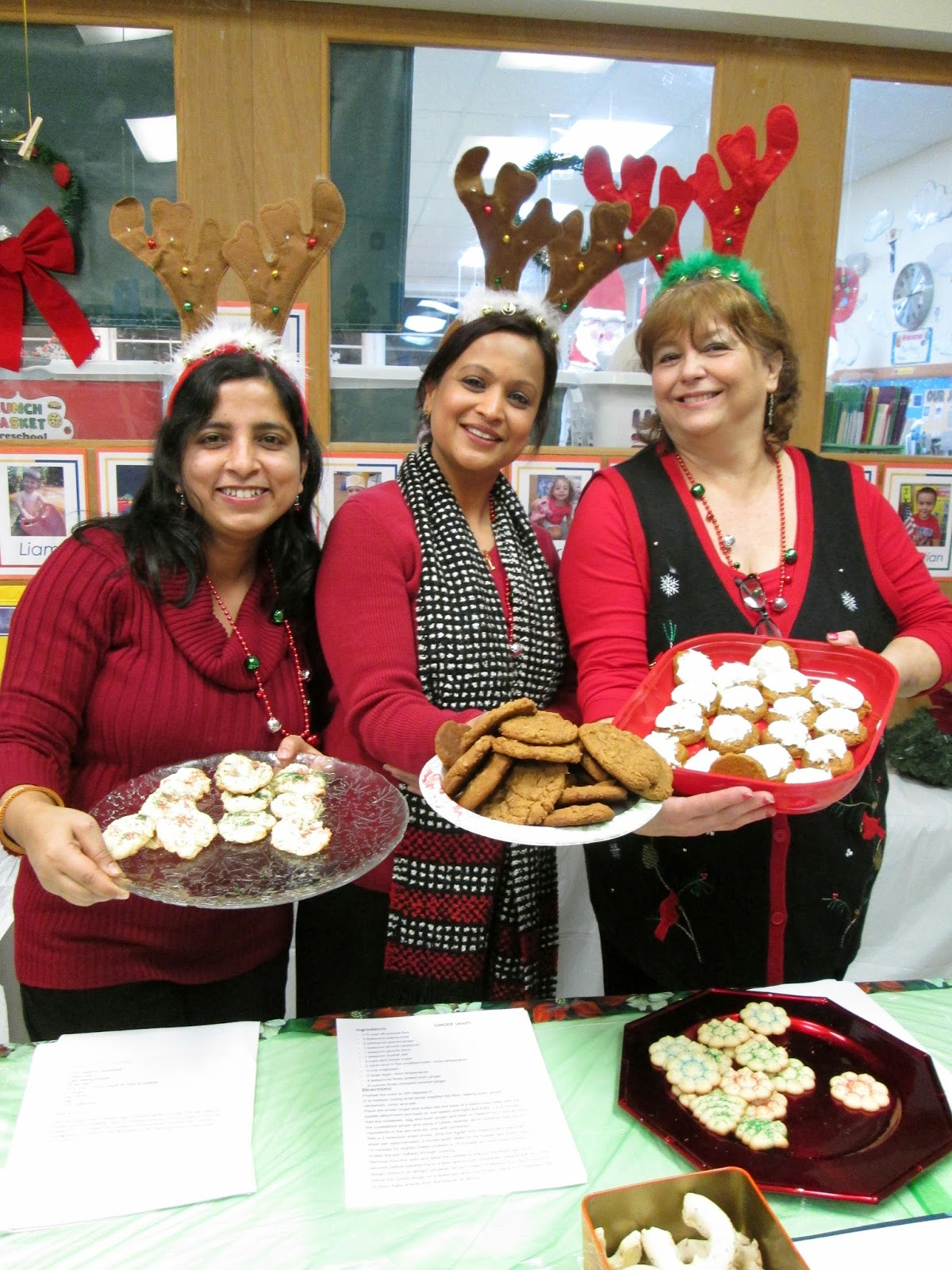
Come hear a professional singer, Mr. Ray  perform songs from the season, make some holiday crafts,  take your photo with Santa, and join in on our sing-a-long!  There will also be a cookie exchange so bring a plate of your favorite cookies with copies of the recipe.  There will also be a photographer available for professional family photos.  All new this year will be a Gingerbread house display.  If you would like to participate in the Gingerbread Display call or email the school for details and deadlines. 

The event is Free to the public and is appropriate for children under 10 years of age.  Call 908-231-7800, email staff@kangarookidschildcare.com or like Kangaroo Kids Child Care facebook page for the latest details on the event or for further information. 


Monday, September 15, 2014

Staff is Key In A High Quality Child Care Program

Making a decision about which child care or preschool program is best for your child is a crucial decision in your child’s first step in the life long learning process.
 

Staff is Key! Visit the prospective school and Observe the teachers interactions with children.  How are teachers interacting with children? You should see teachers in engaged conversations with children at their eye level, either sitting on the floor or with them in low child size chairs. 


            You should see a lot of eye contact, just as you would in a meaningful interaction between adults.  Another important aspect to observe is if there is active listening and two way conversations occurring on the part of the teacher and child, as opposed to the teacher being pre-occupied or distracted with other events in the room.  Active listening shows an interest in the child and places a value on what the child is saying. 

            Interactions should be warm and friendly, with gently encouraging tone of voice. 
Good teachers are energetic, patient, and enthusiastic about the children, the activity and the environment.  They look for teachable moments, whether it is a butterfly going by or a leave falling or a chance to teach positive social interaction. 

            Ask about the longevity of teachers in the program.  Happy teachers not only provide stability for children but in most cases mean they like their job! Teacher’s should be organized and prepared and give children an opportunity throughout the day to choose activities. 

            Finally you should see happy faces and lots of smiles on the part of the teacher and the child, an enjoyment of life and the experiences they encounter together.  Listen for “Happy” sounds coming from all the classrooms. 


            For more information on this topic or to obtain a copy of a free check list you can use as you visit child care centers, call or visit Kathy Feigley at Kangaroo Kids Child Care and Learning Center, 1047 Route 28 Branchburg, 908-231-7800 or email staff@kangarookidschildcare.com or connect with Kathy on Kangaroo Kids LinkedIn Page or Like Kangaroo Kids Child Care Facebook page.  Watch for more things to look for in quality programs for young children in future posts.  

Wednesday, October 24, 2012

Halloween Safety


Halloween can be a fun day for the whole family!  Here are a few great tips from the Center For Disease Control to help make your Halloween adventures fun and safe!  http://www.cdc.gov/family/halloween/

Saturday, September 29, 2012

Back to School Tips


The best environment for children is where parents & educators communicate & work in a collaborative partnership.  Schools should welcome parents as partners.  Parents should connect with schools and teachers by communicating early, volunteering to help, and saying thank you!

Here are some tips for a smooth start to the school year! 
  1.   Connect with teachers early!  Volunteer to help!
  2. Help your child set up systems.  Where and when do children do their homework, how should they set out materials and clothes for the next day?
  3. Stay involved!  Attend Back to School, go to the music and sport events, meet other parents

Tuesday, April 10, 2012

Be A Kangaroo Kid for A Day


If you have never tried Kangaroo Kids April is your opportunity to experience their outstanding curriculum, caring professional teachers and family friendly environment!

April is nationally acclaimed as Week of the Young Child and as a part of the celebration Kangaroo Kids Child Care and Learning Center is offering new students a free day of child care! Just call anytime during April to schedule your child's day of free child care!

Kangaroo Kids Child Care and Learning Center was awarded #1 child care center in America by the National Association of Child Care Professionals and is one of only 7% of schools nationwide to achieve accreditation by the National Association for the Education of Young Children.

Twenty two of their “Hall of Fame,” staff members have been with Kangaroo Kids for a combined total of 260 years…so you never have to worry about high turnover, or inexperienced staff members. In fact, Three teachers at Kangaroo Kids have been awarded the prestigious honor of Teacher of the Year by the National Association for the Education of Young Children.

“We are proud to be being leaders in education of young children since 1991 and of providing high quality early childhood education programs for children from 6 weeks old through 9 years of age. Kangaroo Kids has infant, toddler and preschool programs as well as before and after school activities, summer camp and a full day private school kindergarten,” Said Director Kathy Feigley.

“Early Years Are Learning Years,” is the theme of the nationally celebrated Week of the Young Child. As part of the national Week of the Young Child™ Kangaroo Kids is honoring young children and all those who make a difference in children’s lives. Festivities will be held throughout the country during the week of April 23-27, 2012.

Kangaroo Kids will celebrating the week with an ice cream social, a book fair, and a visit from Clifford the Big Red Dog. They will also host a Joy of Reading program where friends, families, and the community will come to read to the children. Kangaroo Kids kindergarteners will also be sharing their new reading skills with their younger classmates. The kick off on Monday will be a breakfast to go honoring the Mom’s and Dad’s at Kangaroo Kids who provide a loving home environment and a partnership with the educators at Kangaroo Kids. The community is welcome to participate in any of the Week of the Young Child events. The book fair will be open every day from 8am to 6pm.

Young children and their families depend on high-quality education and care, which help children get a great start and bring lasting benefits to the future of our country. Week of the Young Child™ is a time to recognize the importance of early learning and early literacy, and to celebrate the teachers and policies that bring early childhood education to young children.

The National Association for the Education of Young Children (NAEYC), is the largest organization of early childhood educators and others dedicated to improving the quality of early education programs for children birth through age 8. Founded in 1926, NAEYC has nearly 80,000 members.

You can also "like" us on our facebook page at Kangaroo Kids Child Care to learn more about the April Events or call 908-231-7800.

Wednesday, March 21, 2012

Most Popular Baby Names

According to the Social Security Administration, Jacob is the most popular boy’s name of the 21st century (so far), followed by:
• Michael
• Joshua
• Matthew
• Daniel
• Christopher
• Andrew
• Ethan
• Joseph
• William

The Favorite girl’s name is Emily, trailed by:
• Madison
• Emma
• Olivia
• Hannah
• Abigail
• Isabella
• Samantha
• Elizabeth
• Ashley

Go to http://www.ssa.gov/oact/babynames/decades/names2000s.html for year by year popularity of names!

Wednesday, March 14, 2012

Children Thrive on Structure


Many times as parents or teachers we want to give our children a great deal of freedom in decision making. Although freedom of choice can have benefits, it is important to remember, "Children thrive on structure," according to school psychologist Laura Marchese, at a workshop at Kangaroo Kids Child Care and Learning Center. Structure makes children feel more secure. It lets them know what to expect. If your child is having a difficult time getting ready in the morning, try creating a sequence chart with photos of him or her doing each expected behavior. This will be both fun and a learning experience. And, if you stick to it consistently, over time your morning routine should improve!

When it comes to choice, children can be overwhelmed by too many choices. As the parent or the teacher, you must make decisions based on what is best for the child and then give our child choices. For example, if you want your child to eat healthy foods, instead of saying, "What do you want to eat for dinner?” give two healthy choices, "Would you like carrots or peas with your dinner?" Instead of giving your child the opportunity to make any choice for what he or she would like to do on Saturday, you can offer two choices.

Laura also recommended positive, specific praise as the most useful behavior management tool you can use. Catch children doing it right! Many times we address inappropriate behavior instead of complimenting good behavior. If your child is wiggling around at an inappropriate time, instead of saying, "Stop wiggling.” try to wait for the moment he or she stops, and instead say, "I love how nicely you are sitting." If there is a sibling or classmate involved, give the child behaving appropriately over the top, enthusiastic, positive, specific praise, “Joey, I love the way you are sitting!” In the majority of cases, the child behaving inappropriately will correct his or her behavior to gain the positive praise. Make sure that as soon as the child behaving inappropriately begins to behave appropriately, you reward him with enthusiastic, positive, specific praise.

According to Laura, if you create a culture of positive, specific praise, and you do it consistently, you should see change overtime.

Wednesday, March 7, 2012

Holding Back Your Child?

Kindergarten registration has begun! In most school districts, children must be 5 years old by October 1, 2012 to enroll in Kindergarten. Many parents are faced with the dilemma of determining when his or her child should begin school. Today, parents are becoming more aggressive in determining what is in the best interest of their child.

A new phenomena, however, is taking place among many families. According to Preschool Director Mary Innocenzi, parents are opting to keep their young child out of public school an extra year, even if their child’s age falls within the guidelines for school entry. Why? Parents say “I’d rather keep her in preschool an extra year, so she can have an extra year to mature. What’s the rush?” “I don’t feel my son is as mature as the other children. I feel it’s better to keep him out an extra year. Also, he will have more of an opportunity to do well in sports—he won’t be the smallest kid in his class.” “If I keep my child out of school an extra year, he’ll have a decided educational advantage over the others in his class.”

And so it goes…

In the past there were always a few parents who would opt to “hold back” their child, for various reasons. Today, however, many parents feel that they are giving their child a head start by keeping their child out of school an extra year.

It is a difficult decision and some of the social concerns, physical concerns regarding sports, and academic challenges do not often show up until the higher grades. Many parents make the decision solely based on academics. But it is also important to consider social skills, confidence, organization skills, and physical size, as well as family preference. These are important considerations, especially when the new trend to hold children back makes some August and September birthday children almost 2 years younger than their peers. One of the reasons I feel this decision is so important is that the stakes are much higher at 17 years of age, when you want your child to be a leader, not a follower.

If you have any questions where we can help, feel free to stop by the office at Kangaroo Kids to discuss your options and some creative solutions.

Thursday, February 16, 2012

Kangaroo Kids Celebrates 100 Days of School!


Kangaroo Kids Prekindergarten under the direction of award winning teacher Misse Turner celebrated 100 days of learning with a very special day! Children in her Prekindergarten class came to school in PJ’s and very original hair do’s! Each family created a poster filled with 100 random objects. Director Kathy Feigley said, “ It was the most creative years ever, as each family filled the posters with an array of materials including 100 marshmallow, 100 sea creatures, and 100 flowers to name a few. One of the strengths of Kangaroo Kids is the partnership with parents and they certainly outdid themselves with this project. “

Misse Turner and assistant teacher Debbie Cooper read books on the 100th day of school, created edible necklaces with 100 fruit loops and searched for 100 stars. Prekindergarten children

certainly enjoyed the day and in the process had an outstanding math lesson!

Kindergarten teacher, Katie Mileto, “Teacher of the Year,” for 2010 celebrated with her class by creating 100 day of school hats and glasses. The children also had an opportunity to explore

and array of math projects including number searches, graphing, and 100 day number challenges.
Upcoming events at Kangaroo Kids will be “Read Across America,” Donuts for Dad, and March tours for September enrollment and summer camp.

For more information about Kangaroo Kids Childcare and Learning Center please call 908-231-7800 or visit our website www.kangarookidschildcare.com or like Kangaroo Kids Child Care on facebook!

Friday, February 10, 2012

Child Nutrition and Shopping Tips for Busy Moms

Web Md helps busy Moms with these shopping tips:

Moms today are busy, whether they work in or outside the home (or both). But that doesn't mean that they don't care about feeding their families in the healthiest way possible.
The simplest tip to help your family get more of the nutrients they need -- and fewer nutrients that contribute to disease and weight gain -- is to serve more whole foods and less processed food. Eat fruits and vegetables with every meal. Serve your children healthy, lean protein at most meals.

Because it all starts with what goes into the shopping cart, here are some simple "healthy eating" shopping strategies for busy moms.

What Food to Put in Your Shopping Cart

Here's a list of nutrients that are important for child nutrition and may be deficient in the daily diets of some American children.

Buy Fiber-Filled Foods for Your Child

Fiber promotes digestive health, reduces the risk of coronary heart disease, and assists in keeping blood sugar levels normal. Fiber may also help children maintain a healthy weight because it fills you up on fewer calories.
Fiber is found in plant foods, pure and simple. Follow these foods and you'll find all the fiber:
• Vegetables (fresh, frozen, and canned)
• Fruits (fresh, frozen, and canned)
• Beans (dried, canned)
• Edamame (fresh or frozen)
• Nuts and seeds
• Whole grain cereal (hot and cold)
• 100% whole wheat or whole grain bread products
• Whole grain blend pastas
• Whole grain crackers
• Whole wheat tortillas

Pick Up Potassium Power

Potassium is one of the minerals that children today tend not to get enough of, according to recent studies. Potassium works as an electrolyte in the body, helping maintain a healthy balance of water in the blood and body tissues. Potassium also assists in nervous system and muscle function.
Good sources of potassium in the produce section include:
• Artichoke
• Avocado
• Bananas
• Cantaloupe
• Leafy green vegetables (such as beet greens, Swiss chard, broccoli)
• Orange juice
• Prunes and prune juice
• Papaya
• Potatoes with skin
• Tomatoes
Other foods with a lot of potassium include:
• Beans and peas, including lima beans
• Fish, shellfish, and clams
• Low-fat and fat-free dairy
• Nuts (including almonds, brazil nuts, peanuts, soy nuts, and pistachios)

Look for Healthy Protein and Amino Acids

Healthy protein should be included in almost every meal your children eat. The amino acids within protein serve as the building blocks for our body’s cells, according to a report by the Institute of Medicine.
Good sources of protein are animal products and soybeans, which contain all nine amino acids that your body can't make on its own:
• Eggs
• Reduced-fat cheese
• Fish
• Lean meat
• Skinless poultry
• Low-fat milk
• Soybeans and soybean products
• Yogurt
Plant protein sources tend to be deficient in one or more of the essential amino acids. But if you eat the plant proteins on the same day, they complement each other to become complete proteins in your body.
• Beans
• Nuts and seeds
• Vegetables
• Whole grains

Be sure your children eat omega-3 fatty acids and monounsaturated fats. Omega-3 fatty acids are particularly important for infants and young children because they help neurological development and growth, according to the Institute of Medicine. Monounsaturated fats improve insulin sensitivity and help reduce the risk of heart disease and high blood pressure.

These foods are excellent sources of omega-3s or monounsaturated fat:
• Fatty fish such as salmon, tuna, herring, mackerel, anchovies
• Eggs with omega-3
• Nuts
• Seeds
• Olive oil
• Canola oil
• Ground flaxseed
• Products that use liquid olive oil or canola oil (certain margarines, salad dressings, bottled or prepared sauces, and baked goods, for example)

Wednesday, February 8, 2012

What's On The Menu?

Preschoolers are active, spirited tykes. And while they're generally adorable and fun, it's perfectly normal for 3, 4, and 5-year-olds to be opinionated -- especially about eating, according to Elizabeth M. Ward, MS, RD

Here's some advice from the she presents from the experts on how to avoid preschool food fights.

What's On the Menu?

"Preschoolers can eat what the rest of the family eats," says Melinda Johnson, MS, RD, a pediatric nutrition expert and spokesperson for the American Dietetic Association. That's provided family meals feature a variety of healthy foods, in moderation.
Depending on his or her age, an active preschooler's energy needs rival those of some grown women. While there's no need to track a youngster's calorie consumption, it is important to make calories count.

A young child's eating plan should consist mostly of healthy foods, such as lean meats, poultry, seafood, eggs, and legumes; whole grains, such as whole-wheat bread and cereals; at least two servings of dairy foods daily; and fresh or lightly processed fruits and vegetables.
There is room for treats, but it's limited, says Kathy Mitchell, MD, a practicing pediatrician at Harvard Vanguard Medical Associates in Watertown, Mass.
"Keep junk foods like cookies and candy out of the house to reduce temptation," she advises. "But don't go overboard. Kids can become intensely attracted to forbidden foods."

Make Time for Meals

Regular family meals provide opportunities for good nutrition, and much more. Dining together encourages proper table manners and fosters language development and conversational skills. When you minimize distractions by turning off the TV and turning on the answering machine, you show your child that mealtime is reserved for savoring healthy food and nurturing meaningful relationships.
While the ritual of regular meals is comforting to kids, dining with preschoolers can be chaotic and messy. Expect spills and some sloppy eating as your youngster hones his self-feeding skills. Refrain from being a "clean freak" to minimize mealtime stress.
"Being too strict about neatness at the dinner table may cause your little one to feel bad about knocking over his milk or getting food on his clothes," Johnson says.

Tuesday, February 7, 2012

Healthy Eating For Young Children

February is good nutrition month at Kangaroo Kids. Children are learning about healthy foods! They will have an opportunity to taste different fruits and vegetables, to graph their favorite healthy foods, and to create their very own healthy necklace. The necklace is a great project to do at home! The only materials you will need are a box of cheerios or fruit loops and some vinyl lacing string. Your child will have a healthy snack to munch on and at the same time you will be developing their fine motor skills. You can also add a math lesson in one to one correspondence by counting as your child strings each cheerio!

Monday, December 5, 2011

Money and Young Children

When you’re raising children, one of the most important things you, as a parent, can teach your children is how to handle their money. Children should be taught at a young age that they can't always get what they want, when they want it. This automatically means that you can, and must, say "no" to children every now and then. This is also a good opportunity to teach children that life involves making choices and dealing with money is one of many areas in life where we need to evaluate our options and make a choice.

Get a piggy bank for your preschooler and teach him or her about the different sizes and values of coins. As early as possible, let your child save and spend his own money (perhaps at the dollar store) for certain things that he or she wants to purchase.

Any allowance given to a young child should be small, so he or she will ‘run out’ of spending money and consequently learn how to budget. When you go shopping at the grocery store, give your child a small amount of money for example, $5.00, to buy a certain item and tell her she can keep the change. This will teach her how to get the ‘best deal’ for the item she was assigned to purchase.

One good way to get children to save is to say you will match whatever they save (out of their allowance) if they keep it in the bank for 6 months, 1 to 5 years, etc. Whatever they spend is gone and not matched. This way they will watch their savings grow!

When your child grows older, his needs will change. He may start to nag you for additional money so he can get something that everyone else has! Don't always give in to your child's request without asking for something in return. You may want to give your child some extra chores to earn additional money so he learns that it won’t just be handed out. As a parent, you are obliged to provide the roof over their heads and their meals, but it is also your job to prepare your child for the responsibilities of an adult.

Personally, I also feel there should be certain non-paid tasks that are your child’s responsibility as a contributing member of the family unit. This can start as early as age 2, when your child can help do little tasks like putting her socks in the drawer. It may take a little more time, but you are teaching your child a valuable lesson in helping the family and, in the process, your child will be proud of his or her accomplishments.

Once your child is old enough to understand, sit down and show him or her some of your monthly expenses. Many people keep their financial affairs from their children, but when you share this information with them, they know what to expect in the future.

Wednesday, November 16, 2011

Messy But Meaningful

Yes, Kangaroo Kids get Messy! The best learning experiences for children are hands on opportunities where they are truly engaged! Look at the light in their eyes during this hands on experience! They are learning about science and nature as well as expanding their vocabulary and learning social skills like taking turns and kindness to others!


Who would ever have thought so much could be learned from digging for worms!

Monday, October 31, 2011

Happy Halloween

Looking to make some homemade Halloween Ghosts with your little ones?

Paint the bottom of your child’s foot with some white child safe paint and let them step on a piece of black construction paper add a few dots for eyes when it dries.


Now, your child has had some sensory fun, a special time with you and you have a memento to store away for Halloweens to come!

Wednesday, September 28, 2011

How Does Preschool Help A Child Grow?

What are some of the ways preschool helps a child grow? By Child psychiatrist Joshua Sparrow

For some children this may be the first time they're going into a group setting where the attention by caregivers will be divided among several children. Learning to share the relationship to the teacher will be a major new gain. Also, the child will be learning to make friends, share, take turns, and hold back on impulses, areas in which they're still making progress. Preschool will present them with more opportunities to practice these skills. They'll also have opportunities to learn about other children's feelings, and to discover the joy of being generous. It's very early, but you'll see examples where the child will say, "Do you want to play with this doll?" That's their little gift, and they're learning the internal pleasure they get out of that.

Also, at this age kids love the daily routine of preschool. They get excited about mastering the schedule — they know when storytime and snack and lunch and nap happen — and they're really thrilled with themselves. Their fantasy play becomes stronger around this age, and there are ways of being more elaborate with their imagination when other children are around. They also benefit from their peers in terms of language acquisition, and even motor development. You may start to see them climb up on a slide more readily, for instance.

Sunday, September 25, 2011

Separation Anxiety

The transition to preschool is often marked with two steps forward, one step back, as your child grows and learns in amazing ways — but at the same time, regresses in some behaviors, too. In Scholastic for Parents, Child psychiatrist Joshua Sparrow, M.D., is an assistant professor at Harvard Medical School professor and co-author, with T. Berry Brazelton, of Touchpoints 3 to 6 and a former preschool teacher and gives this advice about how to ease your child's transition.

Starting preschool is a big step for many young children. What are some of the biggest challenges they face?
The most common challenge for most kids is saying goodbye to their parents, or trouble separating. For some children this may be their first time out of the home. Others may have separated before, but are now in a new, possibly more demanding situation.

How can parents help soothe their children's separation anxiety?
First, they can look within for whatever ambivalence they have about leaving their child, because he will pick up on those feelings. If there's any hesitation or discomfort or doubt — which there often is; you hate to leave your child when he's unhappy about it — but if you don't feel good about where you're leaving him, or about the fact that you have to leave him, your child's going to feel, "Well, maybe this isn't really a good place or idea." The first thing you have to do to prepare your child is to prepare yourself.

How else can parents help ease the transition for their preschooler?
There are a number of things you can do to prepare your child. Prior to starting school, take your child to visit the classroom and meet the teacher. If there's a way of having a playdate with one of the other children who will be attending the preschool, that's great, because then the children can welcome each other when they begin school. You could give your child a transitional object, like a favorite blanket or teddy bear they can carry around with them all day; or even a story so the teacher can read it. And give your child lots of reassurance that "Mommy's coming back," or "Daddy's coming back."

To reinforce the idea, you can play a little game in which something disappears from sight but your child rediscovers it. Roll a ball under the couch and say, "Look, we can't see it. Do you think it's still there? Let's go look." When your child finds the ball, you can say, "See, even though we couldn't see the ball it's still there, just like Mommy when she went to work." What you're doing is reinforcing "object permanence," a concept that comes earlier (by the end of the first year) but can be threatened by the emotional challenge that separation presents.

At Kangaroo Kids we encourage the parents to visit a number of times with their child before leaving the child on their first day of school. This helps the parent and child to form bonds with the teachers that will help to make the transition on the first day go more smoothly. A familiarity with the environment and new faces provides a more secure foundation for their first drop off at a new school. We also encourage parents to send a family photo that may get lots of wet kisses on the first few days.

Monday, August 15, 2011

What Children can Learn from Gardening?


Because children are naturally curious, they can learn many lessons through gardening and associated activities. What child doesn't like to play in the dirt, make mud pies, or check out the bugs and worms? Aside from this, other educational aspects of gardening might include:

Science - Talk to your child about the life cycle of a plant. What does it need to grow? Ask questions about environmental aspects-what will happen if it gets too cold, rains too much or not enough? Which seeds grow faster?

Math - Many math skills can be involved in planting a garden, such as measuring the space, counting seeds, spacing the seeds or plants, or comparing the sizes of seeds. You can also use a rain gauge to measure the amount of rainfall.

Art - Children can draw pictures of plants or possibly make a series of pictures of the vegetable or fruit from a seed as it grows to a full plant. They can make their own row markers by drawing a picture of the plant on a piece of paper or cardstock, then covering it with clear contact paper and gluing to a popsicle stick.

Language & Reading - Many libraries have books about gardening that parents can read with their children. Look at seed catalogs and let children help choose what to plant. As it gets closer to harvest time, help them look for recipes that might use items they have grown.

Gardening can teach children how to be responsible and care for something (feeding, weeding and watering) and give them a sense of accomplishment as they watch what they nurture grow.

Gardening also teaches patience, as they must wait and watch as plants thrive in their well tended garden.

Some great things to plant for children are Sunflowers, lettuces, radishes, snow peas, cherry tomatoes, squash and pumpkins.

Wednesday, July 27, 2011

Playdough Fun

Sensory play is play that involves the use of one or more of the five senses, touch, sight, smell, taste and hearing. Children learn best when they can experience the world through all their senses. All week at Kangaroo Kids Summer Camp we are doing Messy But Meaningful projects!

Play dough is a good old standby, even for the toddlers! Mix the ingredients below and get out the cookie cutters and a rolling pin and let your child explore. Make a pretend birthday cake or form shapes and letters with the dough!

Play dough
1. 3 cups flour
2. 1 cup salt
3. 3 Tablespoons oil
4. 1 cup of water

You are involving your child’s sense of touch by allowing them to feel the soft flour and gooey mixture, their sense of smell by adding a little cinnamon to your playdough, their sense of site by all the creations and tools they use to make their playdough projects or mixing in different colors, their hearing by the discussion you have while creating the mixture and at times even their sense of taste as you redirect them from experiencing the taste of playdough.

Monday, July 25, 2011

Messy But Meaningful

Remember “Silly Putty” and “Slime?” If you enjoyed playing with either of these as a child here is a homemade version called "Goop" that you can make with your child. You may be encouraging a future scientist!

Goop
1. Two cups white glue
2. One cup liquid laundry starch

Mix together to an even consistency and have fun! Store Goop in the refrigerator.

Here is another recipe for a similar substance to Goop called "GAK". For those inquiring minds, see http://www.stevespanglerscience.com/experiment/00000039> for an explanation of the scientific principles involved in creating "GAK".

This week is “Messy But Meaningful at Kangaroo Kids,” so watch for lots of sensory activities you can do at home for some good educational fun!