Wednesday, July 1, 2015

10 Ways to Teach Kids To Love America

Wondering how to teach your children about Independence Day?  Here are a few great ideas by Gary Drevitch from Parents Magazine.
10 Ways to Teach Kids to Love America
Now is a great time to explain to your children what makes our country so special. 
By Gary Drevitch from Parents Magazine.  Also included is a link for fun projects you can make for July 4th.

1. Our Flag

The next time you're with your child and you see an American flag, point it out. Explain that it stands for our whole country and that it's one way we tell the world who we are as a people. It also shows we're connected to each other as Americans -- we're on the same team. Because our flag is special, we treat it with respect.
At home, look at a flag together and point out that each part has a meaning. The 50 stars stand for our 50 states. The 13 stripes stand for the original 13 British colonies, whose citizens decided in 1776 that they wanted to govern themselves rather than be ruled by a king.

2. Our Pledge

If your child is in school, she may have recited the Pledge of Allegiance, but like many other kids her age, she might not understand exactly what she's saying.
Explain that the pledge is simply a promise. We're giving our word that we'll be loyal (allegiance) to our country, which the flag stands for, because it's a place where we can decide who our leaders will be (republic), where everyone sticks together (indivisible), and where our goal is for people to be free (liberty) and treated fairly by others (justice).
Ask your child to guess whether most countries have a pledge of allegiance of their own. (Most don't.) We, as Americans, decided to create one to remind ourselves of our special freedoms. Written in 1892, the pledge was first recited during a celebration to mark the 400th anniversary of Christopher Columbus's voyage to America.

3. Our National Anthem

If your child watches the Winter Olympics with you, he's likely to hear at least one rendition of "The Star-Spangled Banner." Explain that it's our country's song and that we sing it to show that we are proud to be American. To signal our respect, we usually stand while singing it.
Then share the story behind the anthem: A young poet and lawyer named Francis Scott Key wrote the words during the War of 1812. After British ships bombarded a fort in Baltimore during a fierce battle, Key saw our flag still flying, proudly waving. It meant that we still had our freedoms and that we had defended our young country. Ask your child what the image of a flag waving means to him.

4. Our Independence Day

You don't have to wait until the July 4 festivities to explain what the fun is about. July 4 is our country's birthday. It marks the day in 1776 that a group of determined patriots declared our independence -- that no other country could rule us.
To do this was extremely dangerous. Back then, our ruler was the king of England, and he had one of the most powerful militaries in the world. To rebel against the king was to risk your life. Still, the king's laws were harsh and unfair, so American patriots battled for the freedom to govern themselves. In 1783, the Americans won the fight, which we call the Revolutionary War.For older kids, explain that Americans gave their reasons for rebelling in the Declaration of Independence -- one of our country's most important documents. In it, Thomas Jefferson wrote that all people are entitled to "life, liberty, and the pursuit of happiness."

5. Our Communities

Your child's home and community are the most real and important parts of America to her. "Kids become patriotic gradually as they learn how they fit into their family and how their family fits into their larger community and then their country," says Anne S. Robertson, a spokeswoman for the National Parent Information Network, a nonprofit organization associated with the U.S. Department of Education.
Take a walk together around your neighborhood, and talk about the values shared by the members of your community. Show your child some of the ways in which people work together and depend on each other. Truck drivers, shopkeepers, repair people -- along with many others -- help keep the community running. "Our nation is built on cooperation," says Michael Berson, Ph.D., an associate professor of social-science education at the University of South Florida, in Tampa. Seeing the community in action reassures and enlightens young children, and it teaches that we're all in this together.
·        
6. Our Protectors
Young kids are also comforted by the knowledge that there are people whose job it is to protect and help us. Some, like police officers, crossing guards, and park rangers, work nearby. Others, like the men and women in our army and navy, may work farther away. Your child can feel confident that no matter where these people are, they're ready to keep us safe. A tour of your local fire station can help him experience this in a real and exciting way.
For older kids, point out that our government is made up of people whose job it is to serve us. These include public-school teachers, postal workers, sanitation workers, our president, and the people we've picked to make rules for us, whom we call our senators and representatives.
7. Our Presidents
As Presidents' Day approaches, ask your child to imagine that she has become President -- the leader of our country. What would she do? Give all kids free ice cream? Make sure the world is a peaceful place? Talk about what some of our most important presidents have done; for instance, Abraham Lincoln, our sixteenth President, fought to end slavery in this country and to keep all of the states together, instead of letting them split into two countries.
Explain that being President isn't the same as being a king, who rules for life. Every four years, we get to pick a new leader by voting. But in some other countries, people aren't allowed to choose who governs them, and their rulers don't leave office unless they're forced out.
For older kids, note that in America, "we, the people" are in charge. This kind of government is called a democracy. To illustrate this, involve your child in making some family decisions. "When kids have a chance to practice democracy, they value it," says Susan Adler, Ph.D., an associate professor of education at the University of Missouri, in Kansas City.
8. Our Rights
Our country is special because it guarantees us specific rights -- these are our freedoms. To bring this idea to life, show how you use your rights every week when you pray (or not), read the paper, and say what you think. Ask your child which rights would be most important to him.
It may be the right to eat pizza for breakfast or to ride his scooter in the park. "This helps you see what your child values, and it opens up other conversations," Dr. Berson says.
Ask older kids whether they think people in other countries have the same rights that we do. Explain that in some countries, people can't practice their religion or even complain openly about their leaders. Our freedoms are defined in the U.S. Constitution and its amendments, especially the first ten, called the Bill of Rights.
9. Our Responsibilities
Talk to your child about how our country is like a family: Everyone needs to pitch in. As a member of our country -- a citizen -- we go to school, vote, obey the law, and pay taxes. When your child sees you pick up litter off the ground, point out that being a good citizen means more than just following the law.
It means doing what you can to help others and to keep your community clean and safe.You can also set an example through community service. Find something that is important to your child, such as helping out at his school or cleaning up a playground, and do it together as a family. "Even if you volunteer only two or three times a year, you'll send your child a very positive message about how citizens pitch in," Robertson says.
10. Our People
In most countries, like China or Ireland, citizens share a common culture or ethnicity. But in America, we share a common idea -- that people should have certain freedoms. This promise of freedom has inspired people from all over the world to come here and become Americans. This is a profound and original notion that your child can be especially proud of.

Ask what she knows about your own family's journey to this country. Why did her ancestors come here? Why did they stay? Help your child understand that here, though we come from many different places, we have something in common -- we are all Americans. As Dr. Adler says, "By helping your children connect with people of diverse backgrounds, you're laying the groundwork for them to understand important concepts like justice."
For more information: http://www.parents.com/holiday/july-4th/traditions/10-ways-to-teach-kids-to-love-america/
Craft Ideas at http://ow.ly/Nw8ls

Thursday, June 4, 2015

It's Carnival Time at Kangaroo Kids

Kangaroo Kids Annual Family Carnival on Wednesday June 24th from 5:30-7:30 at 1047 Route 28 in Branchburg to benefit Julia’s Hope Autism Speaks! 

Some of the many activities will include pony rides, petting zoo, and face painting.  Visit with costumed characters Sparky and Kanga!  A DJ will lead families through some fun games and dances!  Participants will have an opportunity to dunk their favorite teacher in the Dunk Tank and swim in Kangaroo Kids onsite pool! And, what carnival would be complete without cotton candy and popcorn!

This year a new feature will be a raffle for a bicycle, 4 VIP Tickets to Dr. Oz Show and a restaurant gift certificate in partnership with the Rotary Club of Branchburg. 


The Carnival will also be a kick off to an exciting summer program at Kangaroo Kids with swimming in the onsite pool, weekly field trips, and lots of fun and fitness.  Each week there will be a different theme as children take an adventure on a Pirate Ship, create Wacky Experiments, and explore Under the Sea adventures!   

 For further information about Kangaroo Kids Carnival, Summer Program or Autism speaks contact the school at 908-231-7800 or email staff@kangarookidschildcare.com.  You can also visit the facebook page at Kangaroo Kids Child Care and Learning Center for updates on the Carnival!  

Monday, April 13, 2015

Week of The Young Child!

The Week of the Young Child originated in 1971,  is an annual event sponsored by the National Association for the Education of Young Children (NAEYC).  NAEYC, the world’s largest early childhood education association, has nearly 90,000 members and is committed to providing and promoting excellence in early childhood education.  The primary goal of the Week of the Young Child is to celebrate and bring attention to the unique qualities and needs of young children and their families.   Also, the Week of the Young Child is a time to honor the educators and other professionals who nurture and provide safe, loving educational environments that can greatly impact the lives of young children.  This year’s theme is “Celebrating Our Youngest Learners”

Research illustrates that during these early years children develop essential social, physical, cognitive and communicative abilities and that the level of these abilities are greatly advanced in the presence of constant, responsive and consistent care.  In today’s economic times, where many families have two working parents, the importance of high quality early childhood programs is critical.  High quality interactions include, but are not limited to, sustained and engaged play, open-ended conversations, individualized learning experiences and recognition of the importance of family involvement. 

Kangaroo Kids, a NAEYC accredited school celebrated this special week with a unique schedule of events.  They kicked off the week with school spirit day Monday where children wore their school shirts to show School Spirit!  Monday was also the Kick off for the Scholastic Book Fair!  On Tuesday families were invited for a pancake breakfast as the beautiful melodies of the harp played in the background. Later in the week bubbles and bouncers filled the school and brought many happy giggles.  As the week was coming to a close they had Chinese lessons, Spanish Lessons, music exploration and Mystery Musicians.   Finally, Kangaroo Kids brought the Week of the Young Child to a close by having an ice-cream social.  A perfect opportunity to enjoy a delicious treat while socializing with classmates and reflecting upon the week! 

You can celebrate the at home every day as well!  Take a moment to read a special book or work on a cooperative craft or art project.  Children love helping in the kitchen and will be thrilled to help prepare dinner or dessert for the family.  If you are going to bake something with your child, perhaps you can even make extra and bring the baked goods to a local nursing home, shelter or other community institution!  Community outings are always special and places such as libraries and children’s museums may be participating in special events to celebrate the week.  Please don’t forget that the best possible way to connect with your child is simply to talk to them.  Drop the cell phone, put away the computer, get at their eye level and engage your child in sustained conversation.  A free and invaluable way to get into the mind and heart of your child!


If you would like information about upcoming programs at Kangaroo Kids or a list of special activities you can do with your child call 908-231-7800 or email us at staff@kangarookidschildcare.com or like Kangaroo Kids Child Care Facebook page.   May is Open House Month at Kangaroo Kids where any new student can try a class for free!        

Monday, March 2, 2015

Help Your Child Fall In Love With Reading

Schools all over the world will celebrate Dr. Seuss’s Birthday on March 2nd.   It is also the start of “Read Across America”, the National Education Association’s annual reading motivation and awareness program that calls for every child in every community to celebrate reading on March 2, the birthday of beloved children's author Dr. Seuss.

Reading is one of the key components for academic success! 

Help your child fall in love with reading by making it a special time with you!  Here are a few tips to help your child become a reader: 


·      Talk with your child — even infants — this increases language development.
·       Make reading time fun by being animated and dynamic when you read!
·       Role model reading.
·       Ask open-ended questions that encourage a sense of wonder, imagination and creative thinking.  Typical open-ended questions are “How” and “Why” questions and questions that don’t have one specific answer.  They teach children to think and be creative!!  

What you can do to help your child be successful at reading:

  1. Babble back to your infants
  2. Use “parentese” with your infant (high pitched voice)
  3. Encourage conversation
  4. Teach site words. e.g., McDonalds, Lucky Charms, Barney
  5. Dramatic play and using props such as puppets can be great opportunities for conversation
  6. Speak another language you are wiring the brain for a lifetime of multiple languages
  7. Encourage drawing and inventive spelling
  8. Script – write their story and make it into a book
  9. In addition to reading stories, include rhymes, songs and other languages (Frere Jacques)
  10. Place labels on furniture and objects in  your child’s environment to create a print rich environment
  11. Make shopping lists with your child
  12. Read and cook recipes together
  13. Look for letters on the Menu when you go out to eat
  14. Look in magazines for pictures that begin with the letter you are studying and cut them out.
  15. Make an alphabet book
  16. Read a book and then ask children a few questions to test their comprehension
  17. Glue letters from an alphabet cereal on a piece of paper.
  18. Put alphabet cereal on a plate and help children make their names out of the cereal
  19. Keep magnetic letters on the refrigerator.
  20. Make up silly songs starting with the letter you are studying.
  21. Talk to your child
  22. Sing with your child
  23. Read to your child everyday
  24. Make up silly rhyming songs with your child
  25. Provide writing materials
  26. Limit television watching and when you do watch, be sure to guide your children to appropriate shows
  27. Role model reading
  28. Visit libraries and bookstores
  29. Select a quality child care program
  30. Read to children and ask them to predict what will happen next.
Here are some tips from the National Association for the Education of Young Children to promote reading at home. Tips to help your child fall in love with reading!

Wednesday, January 28, 2015

Help You Child Become a Problem Solver

In Today’s fast paced society where everyone is connected at all times we expect immediate answers and solutions.  These demands can cause a great deal of stress for adults as well as for children. 

Teaching children to take the time and steps necessary to become problem solvers can alleviate stress and inappropriate responses to challenges.  Here are some great tips from the National Association for the Education of Young Children to help your child become a problem solver.  

http://families.naeyc.org/child-development/help-your-child-become-great-problem-solver        Problem Solving

Thursday, January 22, 2015

New Years Resolutions

It is a good time of year to look at the goals we want to accomplish in the upcoming year!  Most of us make goals, the trick is accomplishing them.  Here are three easy steps:
  1.  First and foremost write your goals down. 
  2. Secondly, as you decide on your goals create a timeline documenting the mini steps you want to take each month to achieve your goal.
  3. Finally put a reminder in your calendar each month to review your goals. 

 These simple steps will go a long way to making your dreams happen!

Start a lifelong habit of goal setting with your children.   Here are a few tips from the American Academy of Pediatrics on appropriate goals for children.  


http://www.aap.org/en-us/about-the-aap/aap-press-room/news-features-and-safety-tips/Pages/Healthy-New-Year-Resolutions-for-Kids.aspx

Tuesday, December 2, 2014

Winter Wonderland at Kangaroo Kids

Celebrate the season with Kangaroo Kids!  Get in the holiday spirit! Bring the family to Kangaroo Kids Child Care and Learning Center’s Winter Wonderland on Friday December 12th from 6:30-8 at 1047 Route 28 in Branchburg.

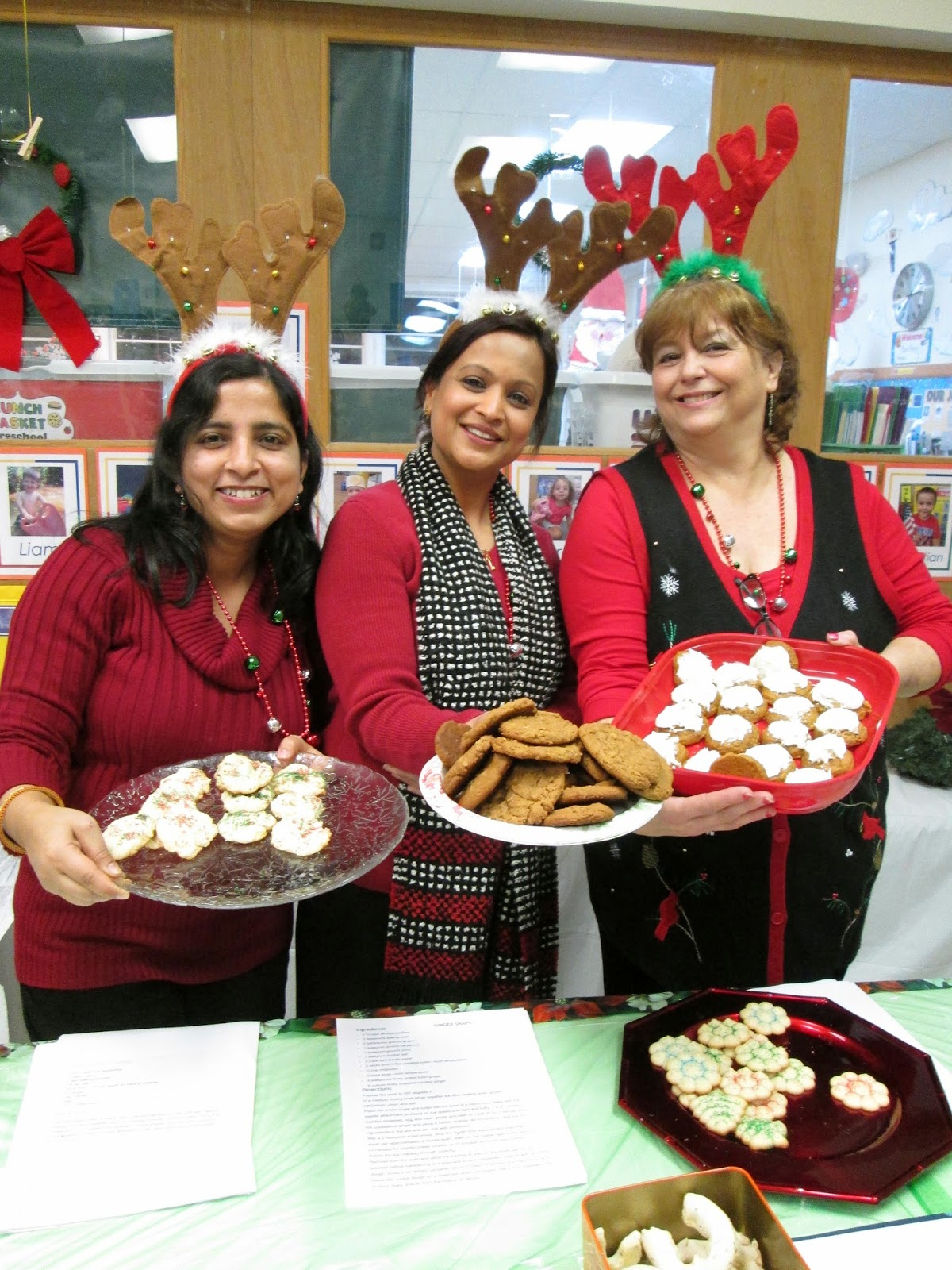
Come hear a professional singer, Mr. Ray  perform songs from the season, make some holiday crafts,  take your photo with Santa, and join in on our sing-a-long!  There will also be a cookie exchange so bring a plate of your favorite cookies with copies of the recipe.  There will also be a photographer available for professional family photos.  All new this year will be a Gingerbread house display.  If you would like to participate in the Gingerbread Display call or email the school for details and deadlines. 

The event is Free to the public and is appropriate for children under 10 years of age.  Call 908-231-7800, email staff@kangarookidschildcare.com or like Kangaroo Kids Child Care facebook page for the latest details on the event or for further information.